













 Recent articles by ProPublica and NPR spotlight the absence of reporting requirements by pharmaceutical companies of their payments to nurse practitioners and physician assistants under the Affordable Care Act’s (ACA) Physician Payment Sunshine Act. The two web articles reference a case in which a Connecticut nurse practitioner pled guilty to accepting $83 million in kickbacks “from a drug company in exchange for prescribing its high-priced drug to treat cancer pain. In some cases, she delivered promotional talks attended only by herself and a company sales representative.” Because the law does not require reporting of industry payments to nurse practitioners such as this Connecticut provider, if not for the lawsuit, the public might have remained unaware of such payments to her and others like her.
Physician Payment Sunshine Act: Should it Be Expanded to Include Nurse Practitioners and Physician Assistants?


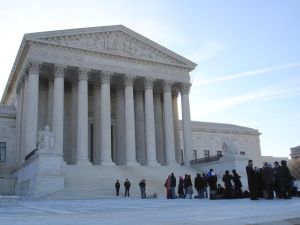 This week in a 6 to 3 ruling, the United States Supreme Court issued its decision in King versus Burwell, a case brought as a major threat to the viability of the Affordable Care Act (ACA). Congress, health providers, Supreme Court and Affordable Care Act watchers and more than 6.4 million consumers who benefit from health coverage assistance in the form of federal subsidies under the Affordable Care Act (ACA) had anxiously awaited a ruling in the case following the presentation of oral arguments in March.
 In the wake of the Affordable Care Act (ACA), healthcare costs continue to rise both for the average American family and for their employers sponsoring healthcare plans. According to a
  Large financial recoveries are often seen as the principal motivation for the government’s unrelenting efforts to combat healthcare fraud. Perhaps a more important objective of the government’s efforts to combat healthcare fraud, however, is protecting patient safety. Chronic overutilization of healthcare, driven by a fee-for-service system with patient cost covered by a third-party payer (public or private), is not just a financial problem, it is a public health problem. The DOJ’s
  By: Lee H. Little
 As Medicare fraud schemes continue to bilk federal taxpayers of
  Hospital systems and other large healthcare providers face increasing risks associated with noncompliance with the Family and Medical Leave Act (FMLA), as FMLA litigation is on the rise. According to
  Attorneys are increasingly becoming aware of distractions caused by cell phones, tablets and other technology in the clinical setting and how they play a role in medical malpractice cases. In fact, attorneys are now advertising statistics about “Distracted Doctors” on their website in hopes of garnering new clients. Interestingly, what they are advertising is happening and the number of instances is steadily increasing and ever more apparent in today’s medical malpractice cases.
 Some critical details of The Affordable Care Act (ACA) are often omitted from the political rhetoric and other noise during public debate about whether the ACA is a “good” or “bad” thing. One such detail – and a huge one – is the ACA’s significant expansion of compliance risks for medical practices and other health care entities.